Ordain is an experiment: a demand layer for films that do not yet exist. Describe the film you want to see and put money behind it. Or browse standing commissions and compete to make one.
How it works
A commissioner posts a brief and a payment.
Filmmakers submit finished work. The commission stands open until they do.
The third entry, or the commissioner’s decision, starts a 30-day window for final submissions.
The commissioner awards half the payment; the filmmakers split the other half by ranked vote.
The commissioner gets the film. Creators keep the copyright.
Four commissions standing now, $100 to $750. Anyone can post a commission. Free to enter. Open to anyone, anywhere. Ordain today is a hand-run experiment: settlement in bitcoin, over Lightning, arranged by a person, not yet a protocol. First commission awarded.
Ordain's first completed cycle ran with Bitcoin FilmFest and MoneroKon. 37 films submitted. Nine finalists screened at the festival in Warsaw. The main track winner was chosen by live audience vote on June 7, 2026.
Commissioned by Ordain through an ARTnership seed grant from Old Dominion University
Not yet open · Awaiting university approval of the grant payout
Ordain is a commission board. You describe a work you want made, put money behind it, creators compete to make it, and you help decide who gets paid.
Every platform for creative work runs the same direction: the creator has the idea and asks strangers for money. Ordain runs the other way. The person with money has the idea. You describe the work you want to see, put money behind it, and creators anywhere on earth compete to make it. Other patrons who want the same thing can add their pledges to your commission. Until now, people who would each pay for the same film had no way to find each other. When a commission settles, the commissioner awards half, and the entrants’ own ranked vote divides the other half among everyone who submitted. Payment moves patron to creator over Lightning, with nobody in between and nobody ever holding the money. Creators keep their copyright; the commissioner gets a license to show the work. Today Ordain runs all of this by hand, one patron per commission: a proof of concept for the protocol it describes.
That reversal is what your film has to make a stranger feel in under five minutes. Every renaissance was commissioned. Florence’s neighbors had the same talent Florence did; Florence had the Medici. To commission is to cause a thing to be that would otherwise not exist, and for five thousand years that act ran through a court, a church, a studio, a platform. Now it runs through a brief and a Lightning address.
Sixty seconds or five minutes. Any tools, any language, any style. The test is the viewer’s next move. A stranger should finish your film already composing the brief for the film they want to exist. The winner becomes Ordain’s public face, on this site and everywhere Ordain goes. The only honest way to make an advertisement for a commission board is to commission it.
Ordain is a commission board. You describe a work you want made, put money behind it, creators compete to make it, and you help decide who gets paid.
In 1974, the philosopher Thomas Nagel argued that we can never know what it's like to be a bat, because consciousness is irreducibly subjective. Fifty years later, millions of people talk to artificial intelligences every day and nobody knows what, if anything, is happening on the other side.
Make a short film that attempts an answer. Not from the outside looking in. From the inside.
Terence Michael is an Emmy-nominated producer with over 20 films and 30 TV shows to his credit. His book Proof of Money makes the case for Bitcoin as a monetary system. He runs 100 Percent Terry Cloth.
Most people don't understand how wasted and dirty energy can be captured and converted into Bitcoin. Make a short film that shows the process: captured methane from a city landfill, combusted and turned into electricity, powering ASIC miners hashing to win a Bitcoin block. Follow the subsidy from the validated block to a Bitcoiner's wallet. Colorful, vibrant, accurate. From the waste of overconsumption to compressed and contained energy in the form of Bitcoin.
John McManus is the author of five books of fiction, most recently Famous Children, forthcoming from Sarabande Books in 2027. His AI television series Strange Currencies, a narrative/game hybrid, is now in development. He is the first patron of Ordain.
Adapt Franz Kafka's "First Sorrow" to film. Favor spirit over letter.
Rogelio Martinez is a Guggenheim Fellow whose plays have been produced at the Public Theater, the Goodman Theatre, and theaters across the country and abroad. He is a co-producer of Billion Dollar Whale, created by David Henry Hwang and Anchuli Felicia King.
Lillian Brown did the makeup for nine U.S. presidents. She died in 2020 at 106.
Make a short film about her. One continuous makeup application. The face in the chair keeps changing, but her hands never stop. Her conversation feels matter of fact, almost incidental, the way talk does when your hands are busy. But through that talk, we learn what's happening in the world outside the room.
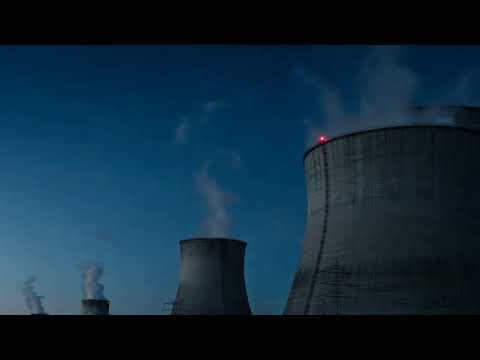
The Roving Reactor is a traveling exhibit about nuclear energy, supported by the Anthropocene Institute, Mothers for Nuclear, and Generation Atomic, with an advisory board that includes nuclear engineers from MIT, Idaho National Lab, and the University of Michigan. rovingreactor.org
The Roving Reactor put $1,000 behind one brief: show the world nuclear energy makes possible. Nartamoto answered with After the Reactor, and The Roving Reactor awarded the commission in July 2026.
Make a short film that shows us the world nuclear energy makes possible. Not the reactor. Not the debate. The world on the other side.
Right now, 666 million people have no access to electricity at all. Another billion are connected on paper but live in the dark anyway because their grid is too unreliable, the power too expensive, the service too broken to matter. Indoor air pollution from burning wood and dung kills nearly two million people a year, most of them women and children. That's what energy poverty looks like, and it defines life for a staggering share of humanity.
The conversation about nuclear energy typically gets stuck on the perceived downsides: safety, waste, weapons, cost. These concerns have concrete answers. Modern reactor designs that shut themselves down passively, waste volumes small enough to fit on a basketball court per decade of plant operation, international safeguards that have kept civilian nuclear programs separated from weapons for seventy years, and new construction approaches driving costs down. But the real failure of imagination isn't about the risks, but the reward. Debating the plant means never getting to the world the plant makes possible.
Economists have shown that higher energy consumption directly increases economic growth, and the causality runs both directions. Cheap, carbon-free, always-on power doesn't just replace what we burn today. It makes entirely new things possible. Desalination turns coastlines into freshwater sources. Vertical farms grow food without weather, without seasons, without pesticides, stacked high in buildings that use a fraction of the land. Synthetic fuels and plastics can be made from air, water, and electricity with no drilling required. New cities can rise in places that water scarcity and grid dependency once made impossible. Transportation gets faster, cheaper, and farther-reaching. The developing world can leapfrog the infrastructure bottlenecks that have kept billions in poverty.
That's the vision we're asking you to make visible.
We're not looking for soft-focus solarpunk landscapes. We're looking for specificity: real places, real problems, real futures. The film should make viewers feel the weight of what energy poverty costs and the scale of what abundant, clean, baseload power unlocks. Research the economics. Understand the stakes. The most compelling entries will be the ones that have done the work to know what they're depicting and why it matters.
A good starting point: the paper "Energy Superabundance" by Austin Vernon and Eli Dourado at the Center for Growth and Opportunity, which lays out in detail what a world of radically cheaper, more plentiful energy actually looks like, from flying cars to indoor farming to new cities to a coming carbon shortage.
The best version of this film doesn't argue for nuclear. It assumes nuclear has already won, and shows us what that victory looks like for the seven-year-old in Lagos, the farmer in Rajasthan, the builder in São Paulo, and the family in rural Appalachia. From the reactor to the world it powers. That's the story.
Post a Commission
Describe the film you want to see. Put money behind it. Creators anywhere on earth compete to make it, and you decide who gets paid.
Default terms: the third entry to your commission, or your own decision, starts a 30-day window for final submissions, with a final close one year from posting. Custom terms are a conversation. Every commission is reviewed before it posts. Accepted commissions appear publicly on this page, under your name or pseudonym, and your pledge becomes a public promise: your money stays with you, and settlement is arranged by hand when the time comes.
Submit
Half of every commission is distributed by peer vote among the creators who submitted. The better your work, the more you earn.
Make a film responding to one of the open commissions. Any format: AI generated, live action, animation, hybrid, experimental. Any tools. Any country. Five minutes or less.
No gatekeepers, no algorithms, no followers required.
Post your finished film as an unlisted video on YouTube or Vimeo, then submit the link below.
Voting
Every commission is split into two pools.
The commissioner controls 50% and distributes it however they choose. They can give it all to one film or split it among several. Their money, their call.
The other 50% is the peer pool. It is distributed by the creators who submitted work to that commission.
Who Votes
If you submitted a film, you vote. Only creators who submitted to a given commission vote on that commission. No outside audience, no popularity contest.
How It Works
Each submission has a title, a still frame, and a short description written by the creator. The display order is randomized for every voter.
Watch the other submissions. Rank your top 5. You cannot rank your own work. Your first choice gets 5 points, second gets 4, third gets 3, fourth gets 2, fifth gets 1. Points are totaled across all voters and converted to percentages. Those percentages determine how the peer pool is distributed.
If a commission has fewer than 6 submissions, rank all of them except your own.
When the Vote Runs
A commission’s vote runs once, at the close of its 30-day settlement window. The window opens when a third film is submitted, or earlier if the commissioner opens it. When it closes, the commissioner either settles or lets the commission keep standing. On settlement, the commissioner awards their half and the ranked vote divides the peer half. With one entrant, the vote awards them the peer half by default.
Why This Is Fair
Your vote does not affect your own payout. Your share of the peer pool is determined entirely by what the other creators gave you. Your vote and your payout are completely decoupled. Voting for garbage does not help you. Voting honestly costs you nothing.
Mandatory Participation
Voting is required to receive your share of the peer pool. If you submit work but do not vote, you forfeit your peer pool share. That share redistributes to the creators who did vote. You still receive whatever the commissioner allocated to you.
No Award
If no submission meets the standard, you can vote “no award.” If “no award” wins a plurality, the commission returns to standing. The payment stays on the board until the work gets made.
Transparency
Results, vote totals, and payouts are published publicly after each settlement. While the board runs by hand, Ordain counts the vote. The destination is a tally anyone can compute from the public record without asking us.
Ars Ordinandi
ars ordinandī the art of ordaining; the craft of setting in order.
Relief of Ur-Nanshe of Lagash, c. 2500 BCE · Musée du Louvre
If you want a specific creative work to exist, your options are to make it yourself or hope someone else happens to make it. There is no infrastructure for saying "I want this" and putting money behind it and watching it get made. A thousand people who want the same film don't know about each other. They can wait. They can hope. They can't act. Ordain is the attempt to build that missing infrastructure: a demand layer for work that does not yet exist.
Ordain is where they act. You describe the work you want to see exist, you put money behind it, other people who want the same thing find you, creators compete to make it, the commissioner awards half the payment, and the entrants’ ranked vote divides the other half. Payment settles in bitcoin over Lightning, anywhere on earth, arranged by hand today.
If you make films, this is paid work. No application, no fee, no platform cut.
The mechanism works for film, music, writing, games, and forms that don't have names yet. It makes no assumption about who is doing the wanting or the making.
Ordain today is that infrastructure at its smallest: a hand-run board, pledges kept public, settlement direct from patron to creator. What it's built toward is an open protocol, like email or Bitcoin itself, on which anyone anywhere runs a board like this one, every commission and vote and payment a public record a stranger can verify, every pledge binding from the moment it's posted while held by no one. Two pieces of that don't exist yet, a pledge that locks without custody and a vote count anyone can compute, and naming them precisely is the invitation. The simplicity is the test. The protocol is the destination.
An experiment in building a demand layer for films that do not yet exist. You describe a film you want made, put money behind it, filmmakers compete to make it, and you help decide who gets paid.
So, decentralized patronage.
Decentralized patronage. At any scale.
Is this the finished version?
No, and deliberately so. What's live now is an experiment, run simple on purpose: one funder per commission, voting and payouts coordinated by hand. The point of this stage is to prove the core claim, that people will put money behind work they want made, and that competition produces it. Once that's proven, the mechanism becomes an open protocol anyone can run, with Ordain as just one instance of it. The simplicity is the test. The protocol is the destination.
Is Ordain a platform or a protocol?
A commission board now, a protocol later. The current site is a hand-run board. What we're building toward is an open commissioning protocol that anyone can implement and run. Ordain itself becomes one venue among many.
How is this different from Kickstarter or Patreon?
On those platforms, creators decide what gets made and audiences decide whether to fund it. Ordain reverses that. The buyers define what gets made, back it with their own money, and vote on which execution wins. The buyers are the creative directors.
What's the closest precedent for this?
Bitcoin. It made value move between strangers at planetary scale without an intermediary. Ordain does the same for commissioning creative work. The local practice already existed in both cases: you could always send cash to your neighbor, you could always commission a portrait from a friend. What changes is the radius.
Why is this possible now?
Three things had to become true at once, and now they have. Lightning had to be mature enough to settle real payments in seconds, anywhere, for any amount. AI tools had to be good enough that a creator could answer a brief in an afternoon instead of a year. And open protocols had to be a real alternative to closed platforms.
What happens when more than one person wants the same thing?
They find each other. One patron posts a commission. Another patron sees it and chips in. Now they're both stakeholders. As the commission grows, more creators show up to compete for it, and the quality of submissions rises with the stakes. Nobody planned it. A thousand people who wanted the same film just didn't know about each other until there was a place to say so. Ordain is that place.
Who votes?
Every commission is split into two pools. The commissioner controls half and distributes it however they choose, all to one film or split among several. The other half is the peer pool, voted on by the creators who submitted, each ranking the others and never their own work. Points are totaled and converted to percentages, and those percentages decide how the peer pool is split. Nobody is awarded the whole thing. Every submission that earns votes earns a share. That peer half is the field's own, not the commissioner's to override, and it settles when the commission closes.
The split is deliberate. A commissioner-only vote invites capture and race-to-the-bottom pricing. A creator-only vote invites collusion. Splitting the decision keeps both sides honest.
When many funders back one commission, the extra funders become stakeholders in the outcome too. The next question covers how their say is weighted.
How does voting work when a commission has many funders?
Shared commissions are what Ordain is for: many people who want the same thing, backing it together. Each funder pledges publicly; the headline number is the sum of the pledges, and every pledge stays in its patron's own wallet until the commission settles. The current site runs the simplest version, one funder per commission: the commissioner distributes half however they choose, and the creators who submitted vote on the other half, which splits among them in proportion to the vote.
As funders join, one principle guides the design: influence should track what is actually being decided. Dividing money among finished works is one kind of decision; choosing a single maker to carry out something that cannot be divided is another. In that second case the originating commissioner keeps the choice, so the deepest pocket cannot buy the vision out from under the person whose commission it is.
What remains open is narrower than the principle itself: the exact weighting, how an added funder's stake translates into voting influence alongside the creators' vote. We would rather settle that one parameter in practice than publish a formula we might revise. The largest version of the indivisible case, a work too big to build on spec, is the next question.
If Ordain holds nothing, what makes a commission real?
Two different things get confused here, so it's worth separating them. One is custody: who holds the money. The other is commitment: whether the commission will actually be paid.
Ordain solves the first by never holding anything, and that part is settled and permanent. The money stays with the commissioner until it goes to a creator. No intermediary, including us, can touch it, freeze it, or take a cut of the principal. This is not a stage we grow out of. A board that held funds, even briefly, even a few cents of a bond, would be a custodian carrying a bank's legal weight, and that is the one thing Ordain can never become. Whatever it grows into, it holds no keys and no coins. It coordinates; it does not custody.
What that leaves open is the second thing. If the money sits in the commissioner's own wallet, what stops them from spending it elsewhere or going quiet at payout? Today, nothing but their word. That is why the board is limited, for now, to founding commissioners whose funding is good for it. The honest state of the project is that a commission right now is a promise, not yet a guarantee.
So the thing we are building is not decentralized holding. The money is already in no one's custody. The thing we are building is a commitment layer: a way to make a pledge binding so a creator can see the commission is real and cannot be pulled, without having to trust the patron personally and without anyone holding the funds. Bitcoin is acquiring the means to do exactly this, to make money committed and unpullable while still held by no one. Each version gets closer.
Could Ordain commission something as big as Brunelleschi's dome?
That is the direction, though not what is live. What decides whether a commission can work is not the size of the prize, it is the cost of a losing attempt. An AI short costs a few hours to make, so a creator will build the whole thing for a chance at the payment and hand you a finished film. Once producing the full work means real budget or months of labor, no one will build it on spec, because losing is no longer a wasted afternoon.
Past that point a commission changes shape. Makers submit proposals instead of finished work, a treatment, a sample, a model of the dome, and one is chosen and then funded to execute, paid in stages against milestones. The commissioner who posted the brief makes that choice and keeps it, so the person whose vision it is decides who builds it.
What changes with size is how the money is released. A finished short is paid in one go when it wins. A dome is paid in stages against milestones, because no one builds a dome on spec and no one wires a full budget to an unfinished one. Whether a milestone is met is the commissioner's call, the same creative-director role they play throughout, not a middleman between the two of you.
The staged version is harder to build, so until it is real, Ordain runs only the small, on-spec case, where the work is finished before it is paid for.
How specific should my brief be?
Specific enough to evaluate submissions against, but open enough that an artist can surprise you. A good brief gives a clear arc and a tone. "A colorful, accurate educational flow of captured methane from a city landfill into Bitcoin via mining" is a good brief. "Make something cool about energy" is not. You're the creative director. Tell the filmmaker what you want to see, then let them figure out how to show it to you.
How does payment work?
Bitcoin Lightning. It moves the amounts a commission uses, from a few dollars to a few thousand, to almost any country in seconds, with no middleman. The current site is a hand-run experiment: when a winner is decided, the commissioner pays the creator directly over Lightning. Ordain coordinates the payout but never holds your money, keeps no accounts, and custodies nothing. The board runs by hand among commissioners whose funding is good for it. We're a commission board, not a bank.
Why Bitcoin?
Because nothing else works globally at every price point. A credit card processor takes a 10% cut on a $5 transaction. A wire transfer costs more than a small commission is worth. PayPal doesn't operate in half the countries where creators live. Lightning moves these amounts almost anywhere, in seconds, with no settlement delay. For a commission board that's open to anyone on earth, that's the only payment rail that fits.
There's a deeper reason too. Once it's a protocol, no one can shut it down. A platform that processes payments through banks can be deplatformed, sanctioned, or pressured into removing creators. A protocol that settles on Lightning can't. At that point a commissioner in any country can pay a creator in any other country, and no intermediary, including us, has the power to stop it.
What if I don't have a Lightning wallet?
You don't need one to submit. We ask for a Lightning address when a commission settles and there is a payment to send you. Setting one up takes a few minutes. We have a short guide at ordain.art/wallets covering the options for creators in the US, Europe, and most of the rest of the world. If you're in New York or somewhere Strike doesn't operate, the guide covers that too.
Why commission a film when AI video is everywhere?
Because nobody's making the one you want. There's more AI content than ever, but it's all supply with no demand signal. A commission is a specific vision backed by real money. That changes what gets made and how seriously a filmmaker takes it.
Why only short films? What about games, music, VR?
We're starting with short films. But the mechanism works for games, music, VR, and forms that don't even have names yet.
What do I get as a commissioner?
The finished video file, with a perpetual license to use it however you like: screen it, post it, submit it to festivals, keep it private. It's yours to use, though not yours alone. The creator retains copyright and can show it in their portfolio or exhibit it elsewhere.
How much do commissions pay?
It varies. Commissions range from $100 to $1,000. AI tools are good enough now that a short film might only take someone an afternoon. We're testing different amounts to see what draws participation and what quality of work each level produces. The briefs vary too. Some are wide open, others are specific. That's deliberate. We're learning what kind of direction produces the best work.
What if I don't like any of the submissions?
Start with how the money is arranged. Your commission splits in half. One half is yours to award to whichever film you like best, or to split among a few. The other half is the peer pool, shared among the filmmakers by their own ranked vote, so it's never one winner taking everything; every submission that earns votes earns a share.
Nothing pays out until a settlement window has run. The third entry to your commission, or your own decision, opens a 30-day window for final submissions. When it closes, you make one call: settle, or let the commission keep standing. Silence counts as letting it stand.
If you settle, both halves pay at once: yours to the film you chose, the peer pool divided among the filmmakers by the ranked vote.
If none of the films wins you over, the commission returns to standing. No money moves, every film already submitted stays in the running, and a new entry can reopen the question. While the commission stands, the full amount stays visible on the board.
One limit keeps this honest. Once anyone submits, your pledge is locked until the commission's declared final close; before the first entry arrives, you can withdraw on 30 days' public notice.
Who can submit?
Anyone. Any tools, any country. AI, live action, animation, hybrid. If it's a film, it qualifies. Creators work on spec: read the brief, decide whether the commission is worth your time, and enter.
Can I submit AI-generated work?
Yes. AI, live action, animation, hybrid, experimental: if it's a film, it qualifies. Most of the commissions on the board right now are open to any tools. What matters is whether the work answers the brief.
Who owns the work?
Creators retain full ownership. Ordain gets a non-exclusive license to display and reference the work on the platform. The commissioner gets a perpetual, non-exclusive license to use the finished work.
What are my rights as a creator?
The commissioner gets to use the finished work however they choose. That's what a commission is. But if the work appears in a context you find objectionable, you can request your name be disassociated from it. For now, the payment is your compensation. Programmable royalty splits are on the roadmap but not built yet.
What's happening now?
Four commissions are standing, $100 to $750, open for submissions with no deadline. A fifth, Let There Be Film ($1,000), is not yet open. After the Reactor, the first commission on the board to be awarded, went to Nartamoto in July 2026. Ordain's first completed cycle, the Future of Money AI Film Contest with Bitcoin FilmFest and MoneroKon, concluded in June 2026 with the winner paid over Lightning.
Can I commission something now?
Yes. Use the Post a Commission form on this page: describe the film you want to see, name your amount, and sign it with your name or a pseudonym. Every commission is reviewed before it posts.
What's next?
Anyone can post a commission now. Same structure: post a brief and a payment, creators compete, the field votes, and settlement follows the vote. The protocol this board is headed toward is specified at ordain.art/protocol.
What are the terms?
Plain language terms of participation are posted on the site. The short version: creators retain copyright, commissioners get a license to use the work, Ordain gets a license to display it, payments are final, and disputes between commissioners and creators are between them.
Is Ordain open source?
Yes. The site is public on GitHub, and the protocol it's growing into is meant to be implemented and run by anyone, so the code is open from the start. Read it or fork it at github.com/anbealbocht/ordain.
What's the business model?
Right now we don't make money. These rounds are testing whether commissions attract competitive work at modest funding levels. Long term, a 1% fee on commissions hosted at ordain.art. The fee belongs to this site, not to the protocol underneath it: anyone running their own board would set their own.
What changes if this works at scale?
The unit of creative work shrinks. Right now a piece has to be big enough to justify the apparatus around it: a novel rather than a story, a feature rather than a short. Ordain makes the minimum viable commission small, so more, smaller, more specific work gets made. The geography of who makes work for whom shifts too. A documentary about Addis funded by a wealthy Ethiopian patron goes to filmmakers in Addis at a price that's substantial there and modest in dollar terms. Whose camera is pointed at whom changes. And patronage stops being a luxury good. You no longer need serious capital to commission real work, which means a social form that used to demand wealth becomes available at fan scale.
What's the longer arc?
The class composition of who becomes an artist broadens. If a working writer or filmmaker can reliably make a living on commissions while building a body of work, the calculus on whether to attempt the career changes for everyone who'd otherwise need a trust fund or a working spouse. That's a slow effect, measured in generations, and probably the largest one. And commissioning stops being just for art. Research questions, open-source software features, local journalism, civic infrastructure proposals: anywhere a specific person or community wants a specific thing to exist and is willing to pay for it. The protocol becomes a general primitive for the bespoke production of public-facing work.
It closes the gap between wanting a thing and watching it get made. You describe what you want. You put money behind it. Other people who want the same thing find you. Creators compete to make it real. The best version wins.
The mechanism makes no assumption about who is doing the wanting or the making. A human commissioner posts one commission a month. An agent with a budget and a set of aesthetic parameters posts a thousand. The supply side scales to meet that demand because the same tools that let agents commission work also let them compete to make it. The loop closes. The marketplace generates its own supply and its own demand. Wherever there is a person with a vision and a creator who can realize it, there is a transaction waiting to happen.

 1st Place · Main Track
The Agreement
Nartamoto · Chosen by live audience vote · 1,500,000 sats
1st Place · Main Track
The Agreement
Nartamoto · Chosen by live audience vote · 1,500,000 sats